


CLEVELAND, OH – In 2021, while the world was focused on a pandemic, convicted ex-East Cleveland Mayor Brandon Lee King and his indicted ex-Chief of Staff, Michael Leon Smedley, were busy opening the city’s back door to more potential environmental terrorism. Under the guise of “economic development,” and guided by the now-indicted Al Zubair brothers, the former King administration courted an unidentified owner of Valarhash (V-Hash as the FBI calls the company). Valarhash was a desperate Communist Chinese cryptocurrency mining corporation, a polluter China ran out of the country that was seeking refuge in the United States.
An FBI affidavit reveals that a woman claiming to be one of Valarhash’s owners thought they were going to locate the parasitic crypto mining business in East Cleveland’s former General Electric lighting headquarters property at Nela Park. The problem is Zubair Mehmet Abdur Razzaq Al Zubair and Muzzammil Muhammad Al Zubair did not own or have control of the property from the beginning of the deal they were handling and knew it.
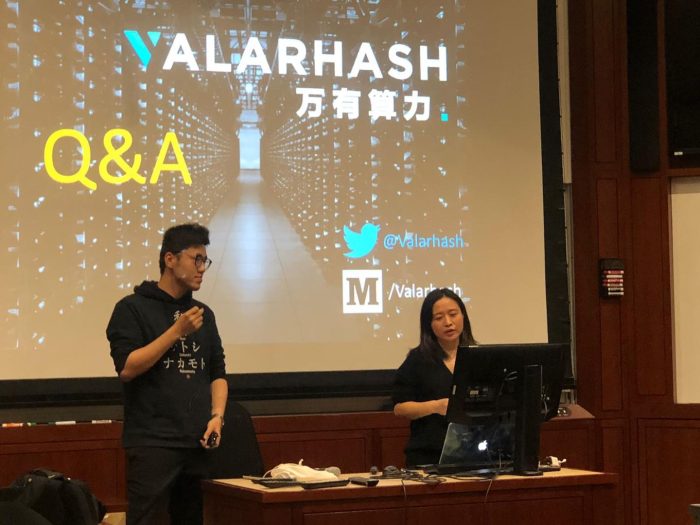
So did King and Smedley who used the mayor’s office for a signing ceremony to authenticate a contract between the brothers and Valarhash CEO Yongshuang Lyu aka Fiona Lu. The FBI affidavit reveals the two East Cleveland politicians “led” the foreign investors to believe the Al Zubair brothers were legitimate and had leasing access to Nela Park, which caused them to release the first $3 million installment.
Specifically, the FBI uncovered a contract signed in the mayor’s office during King’s tenure on August 11, 2021, which read that Dubai Bridge International “possess the rights to lease, rent, borrow and handover occupancy of Nela Park including but not limited to equipment and power sources including general property assets or any developer or tenant of any capacity.” That inserted contract language was a lie and King, Smedley and their “law director,” Willa Mae Hemmons, knew it.
Had the deal been real the initial $3 million investment might have grown to $10 million since China’s ban took effect the next month in September 2021. King, Smedley and “the law department” knew the Al Zubair brothers did not have control of Nela Park, as it had already been sold to Savant Systems, Inc. in 2020. The new owners sold a portion of the property to Phoenix Investments, Inc. in March 2022.
It was King’s job as mayor to ensure the property was given a pre-sale inspection before the sale. It’s a mayoral duty that discredits any claim King may make that he didn’t know the city’s most widely-known property was sold.
None of the FBI’s copies of texts and email between Smedley, King and the Al Zubair brothers show any of them reaching out to Savant or Phoenix Investments officials to discuss a rental and energy lease. The $10 million was never going to be invested after the brothers, with King and Smedley’s help, ripped off one foreign investor for their $3 million. The Valarhash investment was around $9 million. An investor the brothers knew from Dubai added another $1 million.

The “Valarhash” crypto mining investment was a last-ditch business deal for a foreign company that would have turned East Cleveland and surrounding parts of Cleveland, Cleveland Heights and South Euclid into cities with electrical brownouts caused by equipment maintained by imported Communist Chinese labor. Along with the deal and the Communist Chinese workforce would have come skyrocketing utility costs as King and Smedley intended to once again sell out trusting citizens of the United States.
King and Smedley didn’t care that on September 24, 2021, the National Development and Reform Commission (NDRC) and the People’s Bank of China (PBOC) banned crypto mining nationwide, literally evicting the businesses from the country. The People’s Republic of China’s reasons were a message to the rest of the world. China’s Communist government wanted to eliminate unregulated virtual trading and crypto mining inside the nation. Where the crypto mines existed, the government was shutting off the electricity.
China’s concern was that criminals engaged in all types of evil were using cryptocurrencies to hide their transactions, and unregulated crypto miners were major environmental polluters. Members of China’s Communist party are officially atheist. Imagine people who don’t believe in God banning crypto mining, and crypto miners finding a home in God loving America and Russia.
China’s NDRC had been discussing crypto currencies and mining and its derogatory effect on trading and the environment since 2017, so crypto miners entering the business knew it was a risky venture. In 2021, China was cutting off the electricity to crypto mining operations and miners were fleeing the country for the U.S., Russia and Kazakhstan. (Russia is the center of Orthodox Christianity.) China also wanted crypto miners out because the industry came with massive electricity consumption, grid destabilization, high carbon emissions, pollution, financial risk and capital flight that benefitted only the miners.
China didn’t ban mining because it misunderstood the technology. It banned it because the business model was parasitic. Crypto miners profit by socializing electric grid stress and spreading its huge “discounted” electric consumption costs onto individual and family households and local businesses.
After being banned in their own country, Communist Chinese mining firms like Valarhash began hunting for “US suckers.” For them municipalities with industrial space, and desperate leadership with no grasp of energy economics best filled their needs. The investors thought they had found their perfect victims in curve-graded East Cleveland and Cuyahoga County.
Instead of victims the crypto miners found perpetrators who were more criminally minded than China saw … them. With Valarhash’s economic fate on the line, a $3 million loss wiped out the company.
With the Al Zubair brothers posing as “International Economic Advisors” to King — using the unauthorized title to grease credibility wheels — the convicted ex-mayor and his indicted “ex-thief of staff,” Smedley, welcomed a business model that the world’s second-largest economy, a Communist nation, had deemed too dangerous for its borders.
For residents paying attention, this reckless disregard for land use was familiar. While a member of Council in 2014, King had previously voted to allow General Electric’s other property on Noble Road to be used as a construction and demolition debris dump site. It was an ignorant decision that prioritized bribery dollars over the safety and health of the nearby American Negro residents who were exposed to cancerous toxins from 2014 until 2017-18 and had died. Several are now sick with cancers and other pollutant related ailments.
The Nela Park deal was the same song, different verse, same property. Instead of deadly construction and demolition debris from over 1000 Cuyahoga County Land Reutilization Commission homes, the crypto mining pollution would have been a mind-numbing 24-hour, 80 to 85 decibel noise that sounds like a small jet engine, heat, electric grid instability and increased monthly electric bills for local residents and businesses.
To understand the threat, residents need to understand what Valarhash actually did. They did not manufacture goods. They did not create software. They did not manufacture tennis shoes, drones or Gucci bags.
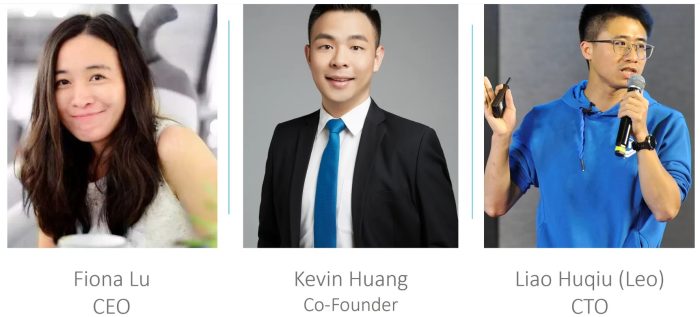
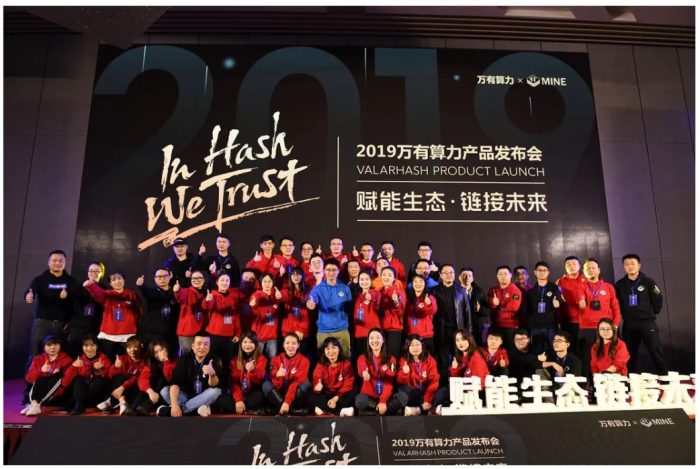
In one publication, Valarhash is identified as being founded by Song Qing and Liang Chen in Chengdu, Sichuan in 2019. In another publication Kevin Huang is identified as a co-founder and Fiona Lu as its Chief Executive Officer (CEO). She appears to be the “owner” identified in an FBI affidavit.
Valarhash’s products were “platforms” called Bytepool, 1THash, 1TMine and Nelson. They had a peak hash rate share (~9%). Reported highest year’s earnings were $5 million. Valarhash operated a one stop digital asset service platform that sold hashrate contracts tied to physical crypto mining machines.
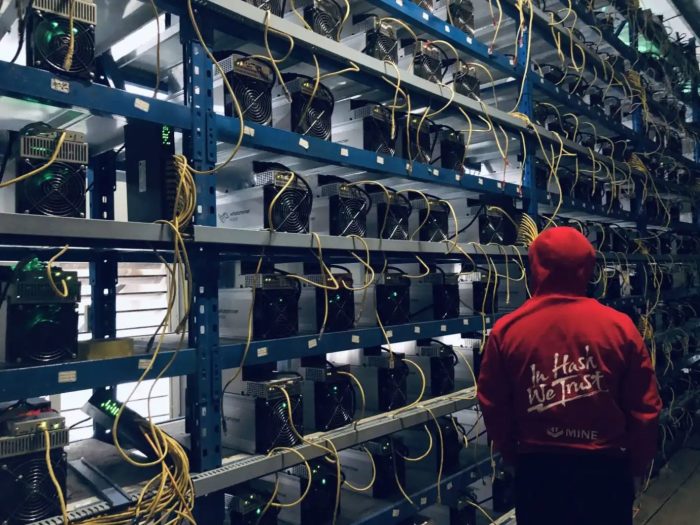
Crypto mining is done with computers called “ASIC” (Application-Specific Integrated Circuits). They are high-powered, single-purpose machines that guess random numbers miners use to “solve” blocks on the blockchain and earn digital currency.
Valarhash intended to invest up to $10 million for as many as 3,000 of these machines at the Nela Park property on Noble Road in East Cleveland. In industrial operations, the ASIC are often packed into “Ant boxes” or modified shipping containers stacked in rows. They are shipped in industrial use foam.
Each machine operates at over 200 degrees Fahrenheit, and each uses about 28,000 kilowatt hours of electricity per year. The average household uses 10,500 kilowatt hours per year. One machine uses as much electricity as close to three households. 3,000 machines would have used as much energy as nearly 8,000 households feeding off the same electric power substation feeding the power draining parasite at Nela Park.
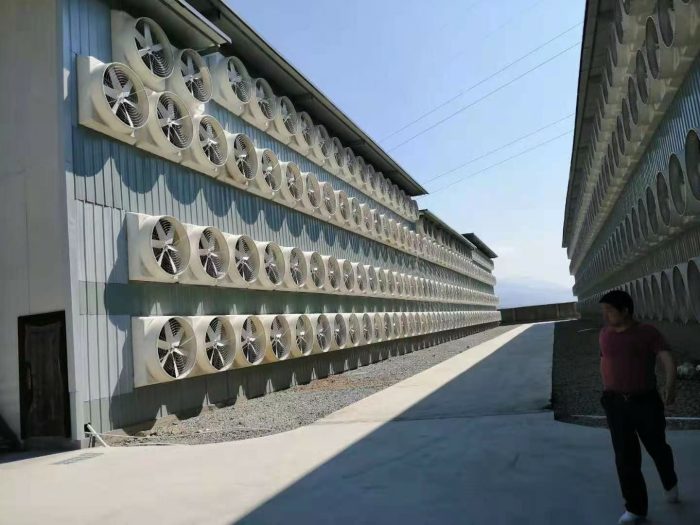
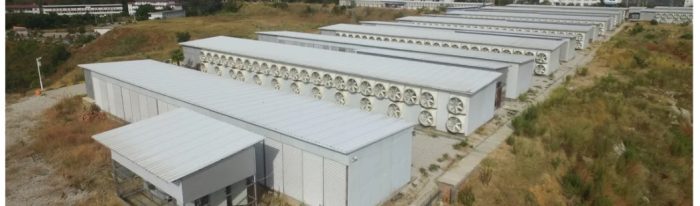
The ASIC’s are so hot to operate they require thousands of massive industrial fans to keep them cool. The fans generate noise levels of 80 to 85 decibels and create a jet-engine-like sound that can be heard blocks away from the crypto mining site all day and night, every day and night.
The $100 million investment Valarhash promised was not for local wages, but for hardware and electricity to exploit cheap and unregulated neighborhood electricity for profit. If 3,000 of the foreign-made ASIC’s were stored at Nela Park, Valarhash needed 35 – 40 employees to cover all three shifts. The workers would be network engineers, system administrators, software specialists, electricians, HVAC technicians and hardware repair specialists.
Boards of Education in and around East Cleveland are not teaching those occupations at Shaw High, Cleveland Heights High, Collinwood High, Glenville High, John Adams High or John Hay High. Americans may have been given the security jobs to protect the property and watch the gate. They have been hired as landscapers. Not technicians.
With all the noise and electricity generated pollution King and Smedley were secretly plotting for East Cleveland with the Al Zubair brothers, had the deal been real, they were creating human health threats the two former government officials should have discussed with the city’s residents and officials in the surrounding cities. No sane official would place such a business in the middle of densely populated neighborhoods.
Residents in East Cleveland, nearby Cleveland wards, Cleveland Heights, South Euclid, University Circle and beyond would have been exposed to fine particulate matter that caused lung cancer, asthma, chronic bronchitis, heart duress, stroke and dementia. The noise pollution, 80 to 85 decibels, would have caused sleep deprivation, hypertension, stress, anxiety, cognitive decline in children.
The heat generated by the computers would have caused dehydration, cardiovascular stress, increased mortality for people affected by normal increases in nature’s heat because their environment would already be elevated by the ASIC’s.
East Cleveland’s electrical grid is old. Dumping a massive, constant industrial load 24 hours daily, 7 days weekly, 365 days yearly onto the local electric power substation creates a “parasitic load.” In states like Texas and New York, the extra demand for electricity needed by similar mining operations caused transformers to blow and forced energy providers to cut power to residents during heat waves or winter storms to provide electricity to the crypto miners.
When demand for electricity increases, prices rise. In aggressive energy markets, the presence of Communist Chinese-owned crypto miners drives up the wholesale cost of power. The costs are passed down to American individual and family households and small and large businesses.
One of the features of the Nela Park contract Valarhash’s owners wanted from the Al Zubair brothers was discounted electric rates. East Cleveland and surrounding residents — many already struggling with utility costs — would have effectively subsidized a Communist Chinese corporation’s reduced electric costs and profits through their monthly FirstEnergy bills.
Crypto mining isn’t just electricity. It’s equipment like the thousands of ASIC machines shipped in bulk, each packed with dense foam blocks. In Cherokee County, North Carolina, Solid Waste Director Rob Ward documented how one crypto miner tried to dump 20 loads of 30‑cubic‑yard dumpsters full of foam, with another 30 waiting. Accepting it would have consumed thirteen percent of the landfill’s annual capacity in a single month.
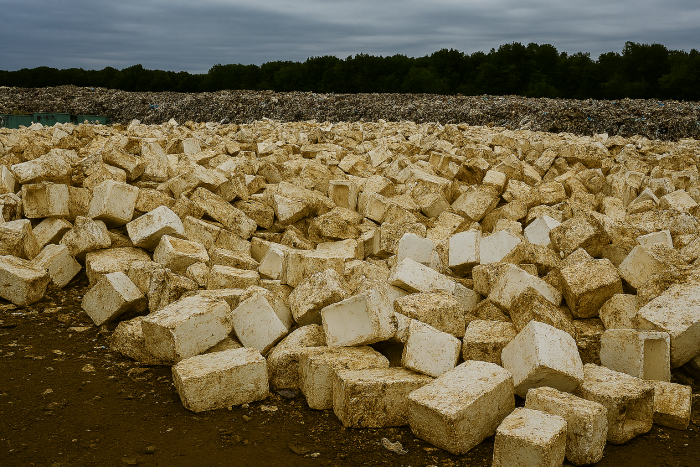
The foam was incompressible. Landfill compactors literally bounced on it “like a memory foam mattress.” Burning the foam creates toxins. It’s also not biodegradable. Cherokee County commissioners had to revise ordinances to ban the foam waste.
If Valarhash had taken over Nela Park, East Cleveland and Cuyahoga County would have faced the same nightmare of truckloads of industrial foam overwhelming local landfills, a problem the Financial Planning and Supervision Commission and Auditor of State Keith Faber never anticipated while supposedly monitoring the city’s finances.
If the deal had been real, and the investors were not being scammed by the Al Zubair brothers, Smedley and King, East Cleveland would have joined a list of American cities whose residents learned a decision their elected officials made was dumb the hard way.
New York, Councilor Elizabeth Gibbs toured a mining warehouse and said she was “blown away by how hot it was — so hot and so loud,” describing doors propped open to dump heat and pull cool air. Residents complained of constant noise and heat bursts, degrading neighborhood comfort.
In Plattsburgh, New York, Mayor Colin Read led the first U.S. moratorium on crypto mining after miners devoured the city’s cheap hydroelectric allocation. Households that had been paying $40–$50 a month saw bills spike to $100 or more. Small businesses like Medusa Gaming, co‑owned by Nathan Frenyea, reported bills climbing from $14–$50 to over $200 with minimal load.
Academic analysis cited by MIT Technology Review found crypto mining increased annual electric bills by $165 million for small businesses and $79 million for households across upstate New York. This is the math King and Smedley ignored. Residents would have subsidized a foreign corporation’s profits through their monthly FirstEnergy bills.
The Al Zubair brothers, King, and Smedley treated Nela Park — a jeweled East Cleveland property — as a bargaining chip in a global hustle. They attempted to install a parasitic industry into the heart of East Cleveland that would have siphoned electric power and money out of the community and sent it offshore.
China banned Valarhash for a reason. They prioritized their grid stability and their citizens over the greed of crypto speculators who have sneaked back into China’s more remote regions to resume their operations.
If a business is too exploitative for the Communist Chinese government, it has no business plugging into our grid. East Cleveland and the surrounding cities dodged a bullet when the foreign investors found con artists instead of honest officials.


