


CLEVELAND, OH — Local followers of the federal criminal trial of convicted ex-East Cleveland Mayor Brandon King’s chief of staff, Michael Leon Smedley, have been wondering why it’s taken more than 70 days after his February 20, 2025 superseding indictment to be heard. His trial with the Al Zubair brothers was originally scheduled for April 14, 2025. The answer for the delay is found in a docket that details the stall tactics being used by his sibling co-defendants.
The two Cleveland brothers, Zubair Mehmet Abdur Razzaq Al Zubair and Muzzammil Muhammad Al Zubair, are each staring at a maximum prison sentence of more than 100 years for an alleged empire of fraud that involved military munitions, pandemic relief theft, and a $10 million cryptocurrency mining scam involving East Cleveland’s mayor’s office and General Electric’s former Nela Park headquarters.

Smedley and King used East Cleveland’s mayor’s office to help the Al Zubair brothers execute their $10 million Nela Park scheme by giving them fake government titles as International Economic Advisors to the Mayor. FBI agents have texts of Smedley discussing deals with the Al Zubair brothers and asking for money, gifts for himself and King, and being gifted a car. It’s amazing these acts were taking place under the nose of the Financial Planning and Supervision Commission and Auditor of State who were supposed to provide monthly monitoring of the city’s affairs.
Once the brothers were given fake titles, badges and city hall access, FBI special agents meticulously documented their creative use of the city’s name in their foreign affairs. Evidence includes them using the fake “credentials” to try and expedite visa applications for foreign associates. They wrote to one potential foreign investor of the power they had to offer them residences and land through the city and county’s property-laundering landbanks.
They bragged of being advisors to King and Governor Richard Michael Dewine. The brothers were even suspected of trafficking dozens of weapons they’d purchased. Muzzamil Al Zubair was accused of harboring narcotics trafficker Kelvin Bedell in his Bratenahl home.
Rather than relying on the type of lawyers they would have paid hundreds of dollars an hour to defend them, the brothers chose a different legal counsel. ChatGPT, some other AI tool and their own knowledge and non-existent legal training to represent themselves … pro se. The two brothers have been the reason for delays that have caused Smedley’s joint April 14, 2025 trial with them to be rescheduled to August 11, 2025, November 17, 2025, and now January 12, 2026. He’s had nearly an extra year of freedom.
Despite having no knowledge of the sophisticated legal maneuvers that keep trials moving forward, the Al Zubair brothers used AI tools to create a nightmare of damaging motions and non-documents their current attorneys must try to clean up. People who get caught committing crimes think they’re smarter than the people who caught them in the act of committing crimes.
An extensive review of court transcripts and docket filings by EJB News reveals an Al Zubair brothers pro se defense strategy that to competent legal minds is completely irrational. They’ve swapped human legal expertise for artificial intelligence “hallucinations,” and destroyed attorney-client privilege through paranoia and secret recordings. The average attorney reading these words can easily see the Al Zubair brothers committed procedural suicide.
The siblings blew up their pro se defense and stripped themselves of an important legal shield on February 26, 2025. During a hearing intended to be a routine arraignment on Smedley’s superseding indictment, the court was treated to an explanation of why the brothers’ and their attorneys were at odds. They wanted to represent themselves and had backdoored their defense team with their own pleadings.
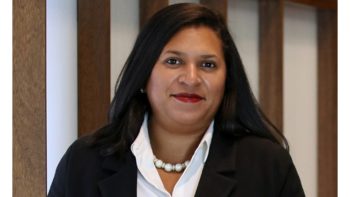
Darden and their legal teams had moved to withdraw as the brothers’ attorneys. She told Judge Nugent her reason in part was because her client had been drafting his own legal motions using artificial intelligence tools and demanding she file them.
“I had a draft motion to dismiss that I was handed by my client, which was clearly some amalgamation of law by ChatGPT or other function,” Darden told the court.
This is the legal equivalent of a patient telling a heart surgeon how to operate based on a Google search or a YouTube video. Artificial intelligence models like ChatGPT are known in the legal profession and among accomplished users for “hallucinating.” AI tools like ChatGPT, Copilot, Gemini and Claude invent court cases and statutes that do not exist. To the unknowing mind they appear real. Ask an AI tool if it hallucinates and it will explain its flaw to the questioner.
Darden and her team didn’t immediately say “no” to the AI-generated motion they had been given by Muzzamil Al Zubair. The veteran attorney explained how she and the other attorneys representing the duo “painstakingly” reviewed the drafts to explain why their legal arguments were incoherent and “not germane to a criminal proceeding.” The brothers refused to listen.
If relying on AI was a doomed legal strategy, secretly recording their private, privileged strategy meetings was catastrophically stupid. Darden learned her team’s client conversations were recorded when Muzzamil Al Zubair attempted to file transcripts of the recordings with the court behind her back.
“I cannot represent someone who believes… that AI or ChatGPT or their analysis of the law is superior to mine,” Darden said. “I’m uncomfortable with anyone who surreptitiously records our conversation.”
Secretly recording their conversations and using them in pleadings was legally insane. In all courts, attorney-client privilege is a shield to the defendant. It allowed the Al Zubair brothers to speak truthfully with their attorneys about the facts that addressed their guilt so they can build a defense. They didn’t understand offers of opportunities to plead guilty for sentences far less than 100 years was a gift.
By recording their attorneys’ conversations and entering them into the public record, the Al Zubair brothers effectively waived their own attorney-client privilege, potentially handing the prosecution admissions or strategy details they would otherwise never know. They also destroyed the trust of the only people in the room obligated to help them.
Razzaq Al Zubair’s attorney, Ali Haque, confirmed the same behavior from his client. Despite the legal team reviewing thousands of pages of evidence and providing detailed memos on why the case was difficult, the brothers insisted on filing artificial intelligence generated motions with “no legal basis.”
The transcript of the February hearing highlights a disconnect between the Al Zubair brothers’ perception of the law and the reality of the federal rules of court and its procedural nuances. Razzaq Al Zubair addressed the court, arguing that he and his brother had “the most accurate understanding” of the case. He insisted that his attorneys should focus not on the evidence of fraud, but on the “chronology” and “constitutional origins” of the investigation.
Focusing on the validity of the court’s authority, or the abstract origins of the investigation rather than the facts of the crime, mimics the “Sovereign Citizen” or fringe legal theories that lead to convictions.
U.S. District Court Judge Donald C. Nugent did the brothers a favor when he appointed teams of attorneys to defend them. He said most defendants get one court appointed attorney. He observed that they were the attorneys the brothers selected before Nugent agreed to let taxpayers pay their legal fees. FBI agents had raided their homes and confiscated their cash and accounts for forfeiture if they lost. Nugent tried to tell them they’d hit the legal lottery with three attorneys from major law firms on their separate legal teams.
Darden is currently the head of the white-collar crime division at Benesch Friedlander law firm and worked in a similar capacity at Squire Patton & Boggs. Both are blue chip law firms. Squire Patton & Boggs is among the nation’s top 10 law firms and international. Darden last year recommended and received a three-year probation sentence for former University of Akron star basketball player Romeo Travis as his attorney.
It’s her experience as a federal prosecutor who worked for the United States Department of Justice in both New York and the Northern District of Ohio that was important to the Al Zubair brothers. Ex-President Joseph Biden had nominated their attorney to lead the prosecutor’s now prosecuting them. The U.S. Senate confirmed Darden’s nomination, and she declined for family reasons.
Muzzammil Al Zubair’s other two attorneys, Robert Kolansky and Allyson Cady were both with the Benesch Friedlander firm. Zubair Al Zubair’s now representing himself with attorney James Jenkins instead of Carole Rendon, Michael Goldberg and Ali Haque. Muzzammil is now represented by James Kersey.
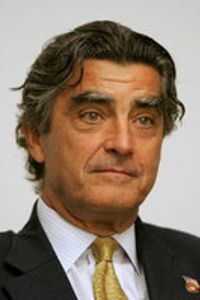
Nugent was straightforward when he said he’d be proud to have the team he’d originally assigned the brothers as his attorney if he were in their shoes. The brothers were in good legal hands and too unsophisticated to know it.
“The fact that you are thrown into the dust bin in history, these terrific lawyers, not very smart start. Okay? Not a very smart start. I’ve seen people represent themselves, and then when the jury comes in and finds them guilty, they go looking at me going what happened. And all I do is hear, get filings based upon what happened.
You can represent yourself under the appropriate circumstances, and I’ll take that into consideration. I can tell you this, that if I was in trouble, any one of these lawyers I would be proud to have represent me because that’s how good all of them are, and that’s the reason you probably went to them in the first place. And then ultimately, they were assigned. And they have two lawyers representing each one of you, which is very, very unusual in a case like this. Usually it’s just one.
So if I allow their motion to withdraw and appoint new counsel, it would be one lawyer for each of you, and then you’re stuck because I’m not letting those lawyers go. But then they’re going to move this case along.”
Judge Nugent, who noted he has “been in this position for a while,” tried to warn them. He explained that firing their appointed team of lawyers he described as “superior” was a grave mistake. The defendants were abandoning a professional defense for a strategy built on paranoia and irrational computer-generated legal theories. Their refusal to accept professional legal advice turned the case docket into a roadmap of wasted time.
It appears that the new court-appointed counsel has managed to wrestle some control back from the defendants, or at least channel their aggression into recognized legal maneuvers.
Filings from October 31, 2025, specifically the Government’s “Omnibus Response” (Document #153), show that the defense is now throwing everything possible at the wall to see what sticks. It is a “scorched earth” act of desperation left for a defense team the Al Zubair brothers handed a mess.
The defense has filed over 20 motions, including:
-
A Franks Motion: Alleging that FBI Special Agent Michael Mitchell lied in the search warrant affidavits in an attempt to suppress the evidence found at their homes.
-
Motion to Dismiss for “Vindictive Prosecution”: Claiming prosecutors are punishing them for not taking plea deals.
-
Motions to Dismiss “Schemes”: Attempting to strip out allegations regarding the “Military Munitions Scheme,” “Nela Park,” and “SBA EIDL Fraud.”
The sheer complexity of the government’s case explains why the “ChatGPT defense” was so dangerous.
The Al Zubair brothers aren’t facing a simple theft charge. They are accused of operating a multi-layered fraud enterprise. The government’s evidence list includes terabytes of digital (internet, cloud and hard drive) data from seized computers; the byproducts of search warrants executed on two properties; bank records from JP Morgan Chase and their Al Zubair Capital; surveillance logs from the FBI; expert testimony on financial forensics.
An AI chatbot cannot cross-examine a federal agent. It cannot read the body language of a jury. It cannot negotiate the complex rules of evidence required to suppress a search warrant.
In the February hearing, after granting the withdrawal of the original lawyers, Judge Nugent looked at the defendants and said, “Game on.”
It may have been a warning that their safety net was gone. By recording their lawyers and relying on artificial intelligence’s algorithms, the Al Zubair brothers have made the prosecution’s job significantly easier. They have delayed their day in court by nearly a year, annoyed the judge who will sentence them, and waived privileges that were designed to protect them.
While their co-defendant, Smedley, lays in the background on his $10,000 unsecured bond, the Al Zubair brothers have turned their defense into a potentially documented journey to prison.
On January 12, 2026, a jury may finally be seated. They will not care about ChatGPT’s interpretation of the law. They will look at the evidence.
Smedley faces a maximum sentence of 65 years in prison if he’s found guilty and sentenced concurrently for each offense. A cooperation deal with federal prosecutors could give Smedley a 5-to-7-year jail term if there’s value in his information and evidence. It’s unlikely he’ll turn on King since they’re both represented by the same Akron attorney, Charles Tyler, Sr.
A guilty verdict for the Al Zubair brothers will mean they may die in prison. It’s a truth that makes them, as defendants refusing to follow the advice of their attorneys, the biggest threat to their own freedom in Case Number 1:24-cr-00017.


dapoxetine hydrochloride tablets
dapoxetine hydrochloride tablets
vardenafil hydrochloride
vardenafil hydrochloride
diflucan
diflucan