


CLEVELAND, OH – For $400 an hour or $3200 a day and a law degree, attorney George Shoup, III is expected to know how to read and obey the court order giving him the equivalent of an $800,000 a year salary. He’s the so-called “savior of East Cleveland” appointed by Court of Claims Judge Lisa Sadler at the request of Ohio Auditor of State Keith Faber. Shoup earns over four times more than, and has one tenth of one percent of the responsibility of, Ohio Governor Richard Michael Dewine who’s paid $176,000.
I underscore his $400 an hour wage because Shoup’s court ordered instructions were simple and bottom line. According to Sadler’s February 4, 2026 order filed at 3:08 p.m., Shoup on page 6 section c was authorized … “to implement internal controls and financial policies to ensure compliance with Chapters 118 and 5705 of the Revised Code. The Receiver may recommend legislative actions to the City Council that are necessary to implement the financial plan or to ensure compliance with applicable law.”
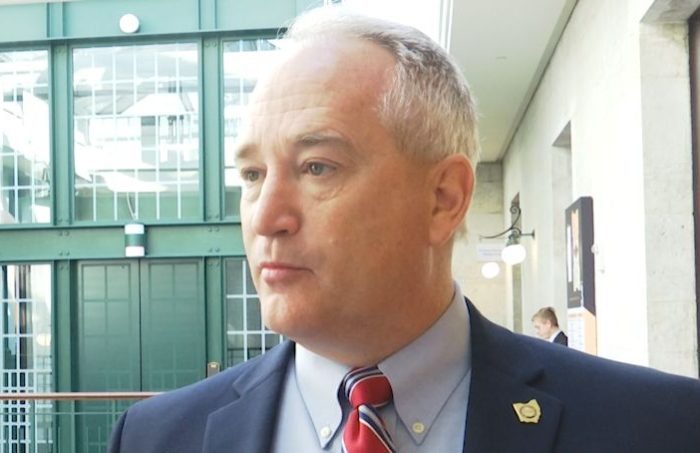
Chapter 5705 is stated in Sadler’s order and its language agreed to in writing by Morgan. It’s one of the chapters of the Ohio Revised Code (R.C) Faber used as the basis of his request to appoint Shoup to the $400 an hour job that made him a “public official” under Ohio law. It’s found in R.C. 118.29(A)(2)(a) as the reason a receiver was authorized to be appointed. East Cleveland officials were not obeying R.C. 5705.
The sections of Chapter 5705 driving 99 percent of East Cleveland’s fiscal problems are the nine laws found between R.C. 5705.41 and R.C. 5705.47. The unsuspended general laws instruct mayors and finance directors not to pay employees, contractors, service providers and themselves without a budget. Yes. It’s that simple.
If they spend money without a budget they’re supposed to be criminally prosecuted and personally responsible for every unbudgeted penny they spent. Shoup was authorized by Sadler to enforce R.C. 5705 and not conspire with local officials to violate it since February 4, 2026.
Compared to Chapter 5705, Chapter 118’s instructions are easy. The Auditor of State, who is the financial supervisor over a city in fiscal emergency, is mandated to work with the Financial Planning & Supervision Commission and Ohio Attorney General to ensure Chapter 5705 is obeyed. That language is found in R.C. 118.07(4) and (5). Since the Auditor of State and the employee he assigned to discharge his duties as financial supervisor failed to ensure convicted ex-Mayor Brandon King obeyed R.C. 5705, Shoup is being paid $400 an hour to enforce it.
Beginning on January 1, 2026, Mayor Sandra Morgan and her personal fiscal officer, Lynn Ann Gries, have paid employees, vendors and entered new contracts without a budget, council and state approval. That’s 57 days, as of today, of illegal spending. It’s evidence of Shoup’s own dereliction as R.C. 5705 is not being enforced.
The truth is East Cleveland has operated without a council approved budget since January 1, 2025. This is the second year of a budget-less government and not the first. As interim mayor Morgan called herself creating and passing a budget that included line items for expenses but no revenue.
Last year as former Mayor Lateek R. Shabazz’s chief of staff, we learned from Financial Planning & Supervision Commission chairwoman Barbara Mattei Smith that Financial Supervisor Tisha Turner had created a “spreadsheet” in place of a “budget” or “appropriations ordinance” to monitor the city’s spending. Morgan’s 2025 budget, the one she claims to have prepared and passed with an art degree, included expenses but no revenue. It wasn’t prepared in compliance with Section 60 of East Cleveland’s charter. Turner’s spreadsheet became the city’s “shadow budget.”
Smith told us to follow Turner’s spreadsheet and offered no state assistance to create a lawfully approved budget. King had appointed an employee, Latasha Williams, he’d hired as a payroll clerk through a temporary agency to serve as his finance director. She didn’t show up for work and claimed to be working from home for nearly two years. Williams had never prepared and signed a budget.
Smith told Shabazz and me his administration had to comply with the spreadsheet Turner created. She was informed that a “spreadsheet” was not an “appropriation ordinance” approved by Council and was not identified in any law as a document a fiscal officer or mayor could use to certify the availability of funds. We saw her insertion of the spreadsheet as enabling the same type of duty-exceeding conduct Smith had engaged in with King. Since the Commission spoke through its meetings, and Smith wasn’t scheduling any, we ignored her. Council’s personalities and 2 to 2 vote impasses did not allow for budget discussions.

Gries was appointed by Morgan in violation of Section 110 of East Cleveland’s charter without council approval or a bond. As a fiscal officer, Gries was supposed to obtain six hours of fiscal officer’s training before she started the job or within her first year pursuant to R.C. 733.81. She may have learned R.C. 5705.41 through 5705.47 and known not to do what she’s now doing no matter what Morgan tells her. These are the laws certified finance directors use to say “no” to the mayors who ask them to violate them.
Since her resume and LinkedIn page show no prior municipal finance experience, wisdom should have taught Gries to be trained … first. She should have at least read the last audit Faber released in 2020.
Morgan’s interview should have included questions about her knowledge of municipal finance laws found in Title 7 and 57 of the Ohio Revised Code, as well as the applicable sections of East Cleveland’s charter and ordinances. Former East Cleveland finance directors have been criminally prosecuted. Morgan does her friends no favors by bringing them into an environment for which they have no preparation.
R.C. 5705 is cited in numerous correspondences I’ve sent to state officials to inform them that Turner, the employee Faber assigned his financial supervisor’s duties, had failed to assist the city in meeting its annual statutory tax applications. Since 2023, King and his fiscal officers failed to submit time tax budgets to the Cuyahoga County Budget Commission and Ohio Department of Taxation. The state at all times was mandated for the past 13 years to ensure East Cleveland’s mayors and council’s prepared and approved budgets for the commission and financial supervisor to review and approve in compliance with R.C. 118.07(4).

At no time in 13 years did the financial supervisor, Auditor of State, or the Commission ask the Attorney General to file a mandamus action to compel compliance pursuant to R.C. 118.07(5). Accountability wasn’t pushed by Morgan or attorney Robert Davis as members of the commission King gave $3000 in American Rescue Plan Act funds as a “stimulus.” Neither reported the “gift” to the Ohio Ethics Commission.
Instead, Faber rewarded thirteen years of his own oversight and audit incompetence by doubling down. Last year he asked the General Assembly of Ohio to let him invent a $400-an-hour job for George Shoup III and told the public he would be the “adult in the room.” The problem with being the “adult in the room” is that Shoup was expected to follow Sadler’s order and enforce R.C. 5705.
By allowing Morgan and Gries to continue running the city without a budget, and with Turner’s duty exceeding spreadsheet, Shoup is not fixing the problem. He is aiding in the financing of felonies.
Pursuant to R.C. 5705.45, any officer who authorizes an expenditure without a legal appropriation is personally liable for that money. That language is not a “technicality” but a mandate.
This is the law that prevents a city from becoming a private ATM for the elected and appointed officials disobeying it. East Cleveland’s treasury is owed every penny that’s been spent without a council approved budget since January 1, 2026. Right now, the person responsible for paying is Gries.
Gries, whose primary qualification for the job seems to be a relationship with Morgan, is currently standing on a trap door. Every time she signs a check without a council-approved 2026 budget, she is attaching her personal bank account to the city’s debt. Without a council approved bond, she’s not covered and she has no “good faith” protection by violating R.C. 118 and R.C. 5705. She accepted the job. She has a duty to know.
Shoup, as a lawyer, should know, too. As a $400-an-hour receiver, he is required to stop the R.C. 5705 and the R.C. 118 violations. Since R.C. 118 provides instructions to the Commission and financial supervisor that are not being obeyed, Sadler’s order appears, at least in my mind, to have given the receiver the authority to hold the state’s agents accountable.
By remaining silent while Gries exposes herself by drawing down federal HUD funds and authorizing payments for wages, benefits and vendors — none of which are backed by an appropriations ordinance — Shoup has exacerbated East Cleveland’s fiscal crisis. Every law enforcement interaction with citizens and business owners have not been authorized with an appropriations ordinance since January 1, 2026. Someone is going to file a legal claim against the city as the state partners in Morgan’s mismanagement.
R.C. 118.99 makes it a first-degree misdemeanor for any official to “knowingly violate” the provisions of the fiscal emergency chapter. By ignoring the mandate in Sadler’s order to “ensure compliance with Chapter 5705,” Shoup has moved past incompetence and into the territory of dereliction.
A receiver who publicly permits illegal spending is a receiver who has shown contempt for Sadler’s court order and forfeited his office. For $400 an hour, the State of Ohio didn’t buy East Cleveland a savior. They bought a high-priced umbrella to shade the same illegal conduct that has kept the city in fiscal handcuffs between 1988 and February 6, 2006, and again between September 2012 and 2026. I am still the only mayor who kept the city out of fiscal emergency for all four years of my term.
Shoup has failed to enforce Sadler’s order, failed to master and obey the laws he was instructed to enforce, and failed the taxpayers of the State of Ohio he is being paid $3,200 a day to protect. The spreadsheet is not a budget, and Shoup is not the solution.
East Cleveland is not a game, and every new employee and appointee walked into a series of ongoing federal and state criminal investigations when they accepted the job or appointment.


cefixime 200
cefixime 200
finasteride for women
finasteride for women
doryx acne medication
doryx acne medication
cialis other name
cialis other name
sildenafil teva reviews
sildenafil teva reviews
cenforce 200 mg tablet
cenforce 200 mg tablet
vardenafil 10mg dosage
vardenafil 10mg dosage
terbinafine dosage for fingernail fungus
terbinafine dosage for fingernail fungus
ketoconazole shampoo clinical overview
ketoconazole shampoo clinical overview
minoxidil mechanism breakdown
minoxidil mechanism breakdown
minoxidil onset professional guide
minoxidil onset professional guide
minoxidil women’s study summary
minoxidil women’s study summary
molecular action of vardenafil
molecular action of vardenafil
online pharmacy safety tips
online pharmacy safety tips
Understanding Sildenafil Duration
Understanding Sildenafil Duration
Variability Reference Library
Variability Reference Library
sildenafil reference guide
sildenafil reference guide
how sildenafil works in the body
how sildenafil works in the body