CLEVELAND, OH – East Cleveland is a city that has been dying by a thousand paper cuts, most of them self-inflicted, many of them illegal. Its mayors have been convicted. Its budgets have been fabricated. Its employees have been paid with money that, by the strict letter of Ohio law, was never lawfully appropriated to leave the city’s accounts.
Its residents have watched their streets deteriorate, their police department shrink, their service department reduced to nothing and their government collapse into a rotating cast of uninformed state and local elected officials who treated the law as a suggestion and the public treasury as a personal account or an afterthought.
When Ohio Auditor of State Keith Faber asked the Court of Claims of Ohio to appoint a Receiver last November 5, 2026, immediately after voters chose Sandra Morgan as mayor elect on November 4, 2025, he wanted a court officer with sweeping powers to take control of the city and force it to comply with state law. Some residents had reason to hope since Morgan was pushing for it. They thought, someone with real authority, real expertise, and a real mandate would walk through the doors of City Hall and make East Cleveland’s elected and appointed outlaws obey the laws that had been ignored for over a decade.
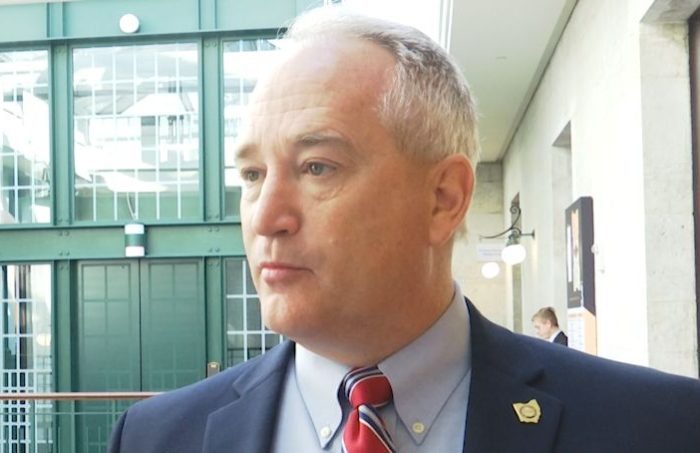
Attorney George E. Shoup III arrived on February 5, 2026. He charged Faber $400 an hour or $3200 a day. He has been on site at East Cleveland city hall, full time, every day since his appointment.
For 74 days, while he studied, met, collaborated and gathered data, the City of East Cleveland had been operating without a single dollar of lawfully authorized spending authority since January 1st.
Every payroll check issued since January 1, 2026, is void. Every vendor payment is void. Every employee who received a paycheck — the firefighter who ran into a burning building, the police officer who answered a domestic violence call, the clerk who processed a permit — is now a potential target for a Finding for Recovery in the next state audit.
Shoup, Faber’s $400 an hour “expert,” knew or should have learned this fact on his first day if he asked for a copy of the city’s 2026 appropriations ordinance. He was told to obey and enforce Chapter 118 and 5705 of the Ohio Revised Code by Ohio Court of Claims Judge Lisa Sadler in writing. He did nothing. And then he filed a report with the Court that didn’t mention it.
How a City runs out of legal authority to spend money
To understand what happened, you have to understand how Ohio municipal finance is supposed to work. It is not complicated. The law is clear, mandatory, and has been on the books since the Ohio General Code was recodified as the Ohio Revised Code on October 1, 1953. The duties Shoup was directed by court order to obey and enforce were found in Chapters 118 and 5705 of the Ohio Revised Code.
Every year, an East Cleveland mayor is required pursuant to Section 60 of the Charter to prepare an estimate of the city’s revenues and expenses. That estimate goes to City Council. Council holds a public hearing. Council passes an appropriation ordinance. It becomes the legal document that authorizes the spending of specific amounts from specific funds for specific purposes for the year. Until that ordinance is passed and a trained fiscal officer certifies that funds are available, not a single dollar of public money can lawfully leave the city’s accounts. The government is shut down.
This is not a technicality. It is the foundational structure of public finance in Ohio. The Ohio Supreme Court said so in 1966, in a case called Lathrop Co. v. City of Toledo, and the rule has not changed since. Expenditures made without a lawful appropriation are void ab initio, legally nonexistent, as if they never happened. The officials who authorized them are personally liable for every dollar under R.C. 5705.45. The recipients can be required to return the funds.

Ohio law gives a city some flexibility on timing. Under R.C. 5705.38(A), a city can pass a temporary appropriation ordinance to cover the first 90 days of the year – January through March – while it finalizes its permanent budget. But the caveat language to that law is “until an amended certificate is received based on the actual balances.” Morgan wasn’t waiting on actual balances when she began spending money on January 1, 2026 without even a temporary appropriations ordinance.
If she had asked Council to pass a temporary budget before the first Tuesday in January, it expires, absolutely and without exception, on April 1. After that date, there is no legal mechanism for a city to spend a single dollar without a permanent appropriation ordinance in place.
Under R.C. 705.18, the statute governing annual appropriation ordinances for Ohio municipal corporations that Shoup has ignored, the law is direct. The annual appropriation ordinance “shall be submitted to the legislative authority at its first meeting after the beginning of the municipal corporation’s fiscal year.” The word is shall. Not may. Not should. Not when circumstances permit. Shall.
East Cleveland’s Charter Section 61 includes similar language as R.C. 705.18. “The Council shall not pass the appropriation ordinance until ten days after such public hearing nor before the first Monday in January.”
East Cleveland’s first Council meeting of 2026 came and went. No appropriation ordinance was submitted. No appropriation ordinance was passed. Morgan proceeded to spend money anyway on payroll, on vendors, on contracts, on office renovations as if the law did not exist.
This is not a new problem. It is, in fact, precisely the problem that caused the Auditor of State to petition for a Receiver in the first place. Morgan did the very same as interim mayor from February 28, 2025 through July 17, 2025 before she was removed from office as a usurper by the Eighth District Court of Appeals and replaced with Council President Lateek R. Shabazz.
There Was a Draft 2026 Budget Left on Mayor Sandra Morgan’s conference table
The story of how East Cleveland arrived at this moment begins, in the most immediate sense, on December 31, 2025.
That night, before midnight, I served as former Mayor Shabazz’s Chief and placed a draft 2026 Mayor’s Estimate on the desk of Mayor-elect Sandra Morgan. The document was a budget template, prepared in compliance with Section 60 of the East Cleveland City Charter, built from submissions by department directors, and designed to give the incoming mayor everything she needed to fulfill her legal obligation to submit an appropriation ordinance to Council at its first meeting in January.
I had commitments from Preveer Consulting’s Mark Parks and Jeanett Wright that they would complete the revenue and expenses budget line items. They stopped communicating after I copied Morgan in an email informing her of the transition progress we were making.
I suspected she told them to stop so she could prepare “her own” budget. She had asked me to stop the civil service tests we had scheduled for police and firefighters, and I said “no.” Mayor Shabazz had requested the tests that had already been taken by applicants. Only two of the city’s 23 police officers were civil service tested in compliance with R.C. 737.11, and none of the dispatchers. Ohio law requires police to be under the civil service.
I left the document with written instructions on the mayor’s conference table. I wanted to give Morgan every tool she needed to start her term in legal compliance.
Morgan didn’t read the 2026 draft budget
This is not speculation. On February 12, 2026. or eight days after the Court appointed a Receiver to fix the very problem Morgan had created, she called me by telephone. We spoke for 53 minutes. During that call, Morgan acknowledged she had received the budget documents. She acknowledged she had not submitted an appropriation ordinance to Council. And when I asked about the draft budget I had left on her desk, she told me plainly: “I didn’t read it.”
Instead of a budget, Morgan’s first significant act as mayor was to ask Council to pass a resolution declaring East Cleveland a sanctuary city – a “Get The Fuck Out ICE” resolution, as I characterized it, designed to block enforcement of federal immigration laws. The city’s statutory fiscal reality made even the preparation of that resolution and the unbudgeted council meeting an illegal act. I told her she cannot lawfully conduct city business without an appropriation ordinance. Morgan did it anyway.
When I reminded her during our February 12 call of a mayor’s legal obligations – her duty under R.C. 2901.01, R.C. 733.03, and Section 113 of the Charter to be the municipal corporation’s chief law enforcement officer, legendary inventor Garrett Morgan’s granddaughter called me “mean.”
Enter the Receiver
On February 4, 2026, Judge Lisa L. Sadler of the Court of Claims of Ohio signed a Consent Order appointing Shoup as Receiver for the City of East Cleveland. The order was explicit. Shoup was required to “ensure compliance with Chapters 118 and 5705 of the Revised Code.”
He was authorized to implement internal controls and financial policies. He was authorized to recommend legislative actions to Council, which gave him every authority to recommend that Council enact a full appropriations ordinance for him to use as a tool to evaluate spending. He was given full access to all financial records, all systems, all personnel. Every book, every record, every dollar in the city’s possession was placed in custodia legis or under the jurisdiction of the Court and the administration of the Receiver.
Sadler’s order also stated, clearly, that Shoup’s immunity from liability extended only to actions taken in good faith compliance with his duties. It expressly excluded protection for malfeasance, bad faith, gross negligence, or reckless disregard of his statutorily-empowered duties.
Shoup arrived at City Hall on February 5. By his own account in his March 6, 2026 status report, he was on site full time from day one for his $3200 a day.
He met with the Mayor. He met with untrained and non-bonded finance director Lynn Ann Gries multiple times. He attended Council committee meetings on February 5 and February 10. He attended a Town Hall meeting on February 11. He obtained access to the city’s accounting system. He contacted ADP, the payroll processor. He contacted outside vendors and consultants. He reviewed bank transactions going back to February 2025.
He was, by every measure, engaged and present.
And yet somehow, in all of those meetings, in all of those reviews, in all of those conversations with the Mayor and the Finance Director, the absence of a 2026 appropriation ordinance never came up as a fact he should report to Judge Sadler. Or if it did, Shoup chose not to act on it. When he filed his first status report with Judge Sadler on March 6 – a document he was required by R.C. 118.29(C) to prepare, reporting on progress toward resolving the conditions of fiscal emergency – he did not mention it once.
The February 19, 2026 letter Shoup ignored
On February 19, 2026, fifteen days after Shoup’s appointment and 50 days into the city’s operation without a lawful appropriation, I sent Shoup a seven-page letter. It was comprehensive, specific, and legally detailed. I could tell from reports I was receiving from city hall that he had no clue as to how to be Ohio’s first municipal receiver, or the laws with which he had to know to discharge his duties lawfully.
I explained the absence of a 2026 appropriation ordinance. I cited the specific statutes being violated. It explained the personal liability exposure of city officials. I described the void status of every expenditure since January 1. I requested specific corrective actions: halt unauthorized spending, demand an appropriation ordinance from Council, notify employees and vendors of their exposure, secure all records.
Shoup received the letter. There is no dispute about it because of a conversation I had with a city official when I asked if Shoup’s response was a “retaliation.”
Shoup did not respond to me and he did not halt spending. He did not demand an ordinance. Morgan’s team met to discuss my letter, but he continued, by his own admission in his March 6 report, to review and release checks “on a routine basis” alongside the Finance Director. This is the same Finance Director who, according to my March 15, 2026 motion for Shoup to show cause during a contempt hearing, is untrained, unbonded, and operating in a position that was never lawfully budgeted or approved by Council.
Nine days after my letter, on February 28, 2026, a former Executive Assistant to former Mayor Shabazz, Dawn Jones, sent Shoup an email with a separate and urgent concern. In the East Cleveland Police Department’s detective room, there was a box of money. Cash. Sitting unsecured in a room accessible to personnel — including, according to my motions, officers who had been rehired after termination and whose fitness for duty is deeply in question.
I had been informed police were holding $30,000 in cash from employees and gathered Mayor Shabazz, Director of Law Kenneth Myers, Prosecutor Alix Nourredine, Executive Assistant Justyn Anderson and fiscal office employee Ponce Russell to confront acting Chief Reginald Holcomb and Beat Patrol Commissioned Officer Joseph Marche about the undisclosed money they possessed. We left far less money for them to hold while Marche was supposed to connect it to solved cases. Jones asked Shoup to secure it, count it, and deposit it into the city’s accounts.
Shoup did not respond to that email either.
The cash or city assets now under the Court’s jurisdiction by virtue of the custodia legis order remained unsecured.
Shoup’s March 6, 2026 report to the Court was an act of concealment
On March 6, 2026, Shoup filed his First Status Report with the Judge Sadler. It is, on its surface, a professional-looking document. It has sections and appendices and bullet points. It discusses meetings and workflows and data analysis. It mentions morale. “The mood in City Hall is upbeat,” it reports, “and city workers, leaders, and constituents have all been supportive and as helpful as they can be.” From my perspective, the writing is formulaic and AI assisted.
It does not mention the appropriation ordinance.
It does not mention R.C. 5705 or any of the applicable sections found in R.C. 5705.38 through 5705.47. It does not mention R.C. 118 by section. These are the two chapters the Court specifically ordered Shoup to enforce, so it’s understood why he omitted R.C. 705.18 and sections 60 through 67 of East Cleveland’s Charter. He doesn’t cite a single federal, state or local law by number in his report.
It does not mention the February 19 certified letter. It does not mention the February 28 email about the cash in the detective room. It does not mention that every paycheck issued since January 1 is void. It does not mention that every employee who received that paycheck could be required to return it.
What it does mention, buried in a list of “Long-Term Priorities,” is this: “Obtaining required consents for appropriations of near-term budget from required parties (City, Council, FPSC, and OAS).” A 2026 appropriations ordinance for Faber’s $400 an hour, $3200 a day “municipal government expert” is a long-term priority. He doesn’t even know he’s headed for a criminal investigation for dereliction, theft, fraud and conversion.
The March 31 deadline, which is the date after which Ohio law provides no legal mechanism for the city to spend a single dollar, was 25 days away when Shoup filed that report. He classified compliance with a mandatory statutory deadline as a long-term and not immediate concern.
The report also contains an admission that my March 15 and March 16, 2026 show cause and supplemental motions to Judge Sadler identified as critical. In describing the Receiver’s financial oversight activities, Shoup’s report states that “the Receiver and the City’s Finance Director review checks to be released on a routine basis.”
This sentence is not a minor detail. It is a crime confession. It means that Shoup – a court-appointed officer with actual written notice since February 19 that no appropriation ordinance exists – has been personally reviewing and approving the release of unbudgeted checks to vendors he doesn’t know if Council approved. He is not a passive bystander to this statutory crisis. He is an active participant in it.
Every check he reviewed and released after February 19 was a knowing act in violation of the Court’s Order, federal, state and local laws, and his professional obligations as an attorney with duties to “the organization” as his “client” pursuant to Prof.Cond.R. 1.13. Shoup is supposed to report Morgan and her fiscal officer’s crimes and not join them as a co-conspirator.
Morgan and Shoup walked off the streets with no knowledge of running cities
Beyond R.C. 5705, there is another state law that governs appropriations that I referenced above. It is one that makes the Receiver’s failure even harder to excuse found in Title 7 of the Ohio Revised Code that establishes the statutory authority of municipal corporations and their elected and appointed officers.
R.C. 705.18 governs annual appropriation ordinances for Ohio municipal corporations. It requires that the appropriation ordinance “be prepared by the legislative authority from estimates submitted by the mayor” and that it “be submitted to the legislative authority at its first meeting after the beginning of the municipal corporation’s fiscal year.”
This statute does not exist in isolation. East Cleveland operates under a financial recovery plan overseen by the Financial Planning and Supervision Commission pursuant to laws the General Assembly of Ohio placed in Chapter 118 of the Ohio Revised Code. Any appropriation ordinance the City passes must comply with that recovery plan and receive the Commission’s approval. The Commission exists precisely to ensure that the City’s spending decisions are sound, legal, and consistent with its path out of fiscal emergency.
There has been no ordinance submitted. There has been no ordinance passed. There has been no submission to the Commission. There has been no Commission approval. The Commission – the oversight body whose entire purpose is to supervise East Cleveland’s financial recovery – has been bypassed entirely, not by deliberate defiance but by the simple absence of the document that would trigger its review. What is of note is that Morgan served as a member of the same Commission that did nothing to prevent convicted ex-Mayor Brandon King from committing the very same crimes she’s committing in office.
The Receiver, whose mandate includes ensuring compliance with the financial recovery plan, has allowed this to continue for every day of his $400-per-hour tenure.
The Panic
I’ve heard from city hall that Morgan, Shoup and Gries are in a panic. They should be. I have filed two motions with Judge Sadler and exposed their contemptuous misconduct in office. Here is what every official involved now understands:
Every check signed since January 1 is void. The vendors who received payment can be forced to return it. The employees who received paychecks face potential Findings for Recovery in the next state audit. The officials who authorized the payments are personally liable for every dollar under R.C. 5705.45.
The Receiver is not immune. The Court’s Order protects him only for actions taken in good faith compliance with his duties. Continued authorization of void expenditures after actual written notice, combined with the omission of material facts from his court-filed status report, is not good faith compliance. It is, at minimum, gross negligence.
At maximum, it is knowing concealment and an 18 U.S.C. 4 misprision of felony violation if the U.S. Attorney for the Northern District of Ohio wants legislation to support their writing checks from the city’s American Rescue Plan Act, HUD, FEMA and USDOJ accounts without a council-approved appropriation. For letting non-civil service tested and OPOTA-violating private citizens impersonate peace officers to make arrests without appropriations authority, the city’s organizational liability pursuant to 18 U.S.C. 1983 and 18 U.S.C. 241 and 242 are profound. Federal grant recipients are required to maintain compliant financial management systems. East Cleveland has not had one since January 1.
The Law Department is not funded. There is no approved appropriation line item for the Department of Law. Every legal opinion rendered, every contract reviewed, every motion filed by city attorneys since January 1 has been performed without lawful funding authority. The legal department is operating in a statutory void, which means the City is currently incapable of lawfully defending itself in any legal proceeding, including this one, or prosecuting any action on its behalf.
The April 1 deadline is two weeks away. After March 31, even if the city wanted to pass a temporary appropriation after that date, Ohio law provides no mechanism. The window has closed. The city’s legal spending authority expires. There is no extension, no grace period, no judicial override. The statute simply ends an already shut-down government’s spending authority for the remainder of the year.
This is what panic looks like from the inside of a government that has been caught.
What must happen before April 1
The residents of East Cleveland deserve to know what their government has done and what must happen to fix it. The answer is not complicated, but it requires the Court to act immediately.

Judge Sadler must schedule an emergency hearing before March 25. She must order the Receiver to appear and explain why he should not be held in contempt for authorizing void expenditures while concealing the appropriation crisis from the Court. She must compel the immediate preparation and passage of a 2026 appropriation ordinance that complies with East Cleveland’s financial recovery plan and receives the Financial Planning and Supervision Commission’s approval. She must order the Receiver to secure, count, and deposit the cash sitting in the police department detective room. And she must consider whether a Receiver who has demonstrated this level of disregard for his statutory duties is the right person to lead this city’s recovery.
The Auditor of State, Faber, whose petition for a Receiver was grounded in the City’s chronic violation of R.C. 118 and R.C. 5705, must answer his own question. If those violations were serious enough to require a Receiver, why are they not serious enough to require emergency action now that the Receiver has allowed them to continue?
And I’m now writing to the residents of East Cleveland – who continue to support the most unqualified among its citizens for elected office – you deserve to know that this time, the violations have been documented, the notice has been given, the filings have been made, and the law is unambiguous.
The panic in City Hall is real. It is a signal that the people responsible for this crisis know they have been caught by me, again. The question now is whether the Court will act before the clock runs out.
It’s also a question of whether Morgan and the so-called “smart” people she hired will read all the laws I’ve outlined in my previous email to them since March 2023, and implement them before the March 31st deadline, the July 15th deadline and the July 15th and 31st deadlines. Here’s why.
R.C. 5705.28 requires a trained fiscal officer to prepare and submit An Annual Alternative Tax Budget for Council to approve. The taxing authority of each political subdivision shall adopt a tax budget for the next succeeding fiscal year on or before the 15th day of July. Shoup’s long term thinking doesn’t reflect knowledge of this short-term state law mandate.
R.C. 5705.30 requires there to be public inspection and hearing on the tax budget. This section requires the budget to be filed for public inspection at least 10 days before its adoption, with at least one public hearing held.
If Morgan and Shoup are still “studying data” in July and fail to adopt this budget, the County Budget Commission can refuse to certify tax rates for the City, effectively starving the City of property tax revenue for the following year.
The July 15th and July 31st Deadlines: Certification of Revenue
These dates along with the following state laws I’ve shared below establish the official taxing relationship between the City and the County Auditor (Cuyahoga County), Cuyahoga County Executive Chris Ronayne’s appointee.
R.C. 5705.27 is the law that requires the County Budget Commission to review the city’s tax budget. The Council must adopt the tax budget by July 15th and submit it to the County Auditor by July 20th (unless an extension is granted).
R.C. 5705.34 is the procedure for the Certification of Tax Levy. By approximately July 15th to the 31st, the Budget Commission is supposed to certify its findings back to the city.
If the Receiver hasn’t cleaned up his, Morgan’s, Austin’s and Gries’ 2026 mess, the city cannot accurately project its “balances carried over” for the 2027 tax budget. Shoup can’t balance the city’s financial records without an opening balance for the 2026 fiscal year.